


By Gbenga Shaba
On February 23, 2026, Nestlé Nigeria announced financial results that marked a dramatic recovery for the company. It had posted a net profit of ₦104.97 billion for the 2025 financial year, reversing the ₦164.6 billion loss recorded in 2024. Revenue had climbed by 26 per cent to ₦1.2 trillion, while net finance costs fell sharply from ₦389.46 billion to ₦58.54 billion. The company attributed its return to profitability to stronger operational performance and renewed efficiency, supported by greater stability in the naira.
Alongside its financial recovery, Nestlé has continued to highlight local sourcing as an important part of its business strategy. The company has reported that more than 80 per cent of its raw materials are sourced locally, including maize, soybeans, sorghum, cassava and palm olein. The strategy reflects a broader effort by manufacturers to reduce exposure to foreign exchange volatility by relying more heavily on domestic agricultural supply chains.
Earlier in January, several hundred kilometres north of Lagos, 2,143 grain farmers in Kaduna State were confronting a very different economic reality. They had completed a farming season in which a 50kg bag of NPK fertiliser cost about ₦60,000, while urea sold for approximately ₦50,000. The cost of cultivating one hectare of maize had climbed above ₦2 million, roughly double the previous year’s figure. With an average yield of 45 bags of 100kg per hectare, the farmers calculated that each bag needed to sell for at least ₦44,578 for them to break even. Instead, the market price fell to approximately ₦22,000 per 100kg bag. Their estimated aggregate losses exceeded ₦10.16 billion, according to a petition submitted to the Federal Government through their lawyer.
These figures sit at the heart of Nigeria’s food manufacturing paradox. A company can report a strong financial recovery while farmers operating within the agricultural economy that supplies industrial processors struggle to recover their production costs. The manufacturing recovery is real. But the farm economy beneath it remains under severe strain.
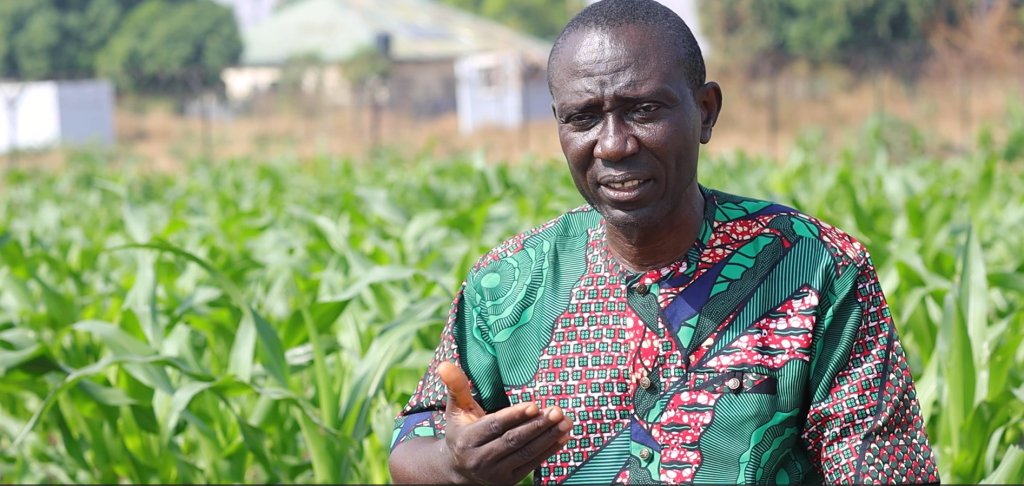
A Maize farmer in Nigeria
As a journalist who also farms, the arithmetic is not abstract. It represents the difference between a policy announcement and a planting-season decision. It explains why the cost of a bag of fertiliser must be weighed against the expected price of the harvest months before a single seed goes into the ground. It also explains why a corporate sourcing strategy that looks robust on a balance sheet can remain vulnerable to economic pressures in the field.
The National Agricultural Extension and Research Liaison Services (NAERLS), in its 2025 Wet Season Agricultural Performance Survey, reported that the cost of producing major crops per hectare increased by between 29.2 per cent and 36.8 per cent. Maize production costs rose by 29.2 per cent, while soybean production costs increased by 36.8 per cent. The national average price of NPK fertiliser climbed by 19.5 per cent, from ₦43,000 to ₦52,000 per 50kg bag. By early 2026, market surveys in the Federal Capital Territory put the prices of NPK and urea between ₦52,000 and ₦56,000 per bag. In Kaduna, farmers reported paying ₦60,000 for NPK.
At the same time, increased output and weaker purchasing power contributed to a decline in maize prices. NAERLS reported that increased supply helped reduce market prices despite rising production costs. For the Kaduna farmers, the price collapse was particularly severe. A 100kg bag that they estimated cost more than ₦44,000 to produce was selling for approximately ₦22,000.
This is the economic squeeze confronting Nigerian farmers. Input costs are rising faster than the prices many producers receive for their harvests. A farmer who borrows at commercial interest rates, which agricultural stakeholders have described as exceeding 30 per cent in some cases, to purchase fertiliser and hire labour is caught between two opposing forces. When harvests are good, increased supply can push prices down. When prices rise, it is often because production has been disrupted by poor harvests. The farmer is exposed to both risks.
The consequences are becoming visible in planting decisions. A PwC assessment cited in January 2026 found that only 62 per cent of farmers used agricultural inputs in 2025, down from 81 per cent in 2024. The assessment also reported a 24 per cent decline in input application and an 8 per cent contraction in cultivated land. Farmland under cultivation across 13 pilot states reportedly fell 36 per cent below intended production levels during the 2025/2026 dry season. Meanwhile, acute food insecurity was projected to affect 34.7 million Nigerians during the June to August 2026 lean season.
Farmers operating within the same agricultural environment as Nestlé’s suppliers are not immune to these pressures. They purchase the same fertiliser, face similar transportation costs and contend with the same financing difficulties. For farmers supplying industrial buyers, the challenge is compounded by requirements for consistency, quality and volume. Those requirements become increasingly difficult to meet when the economics of production are working against the producer.
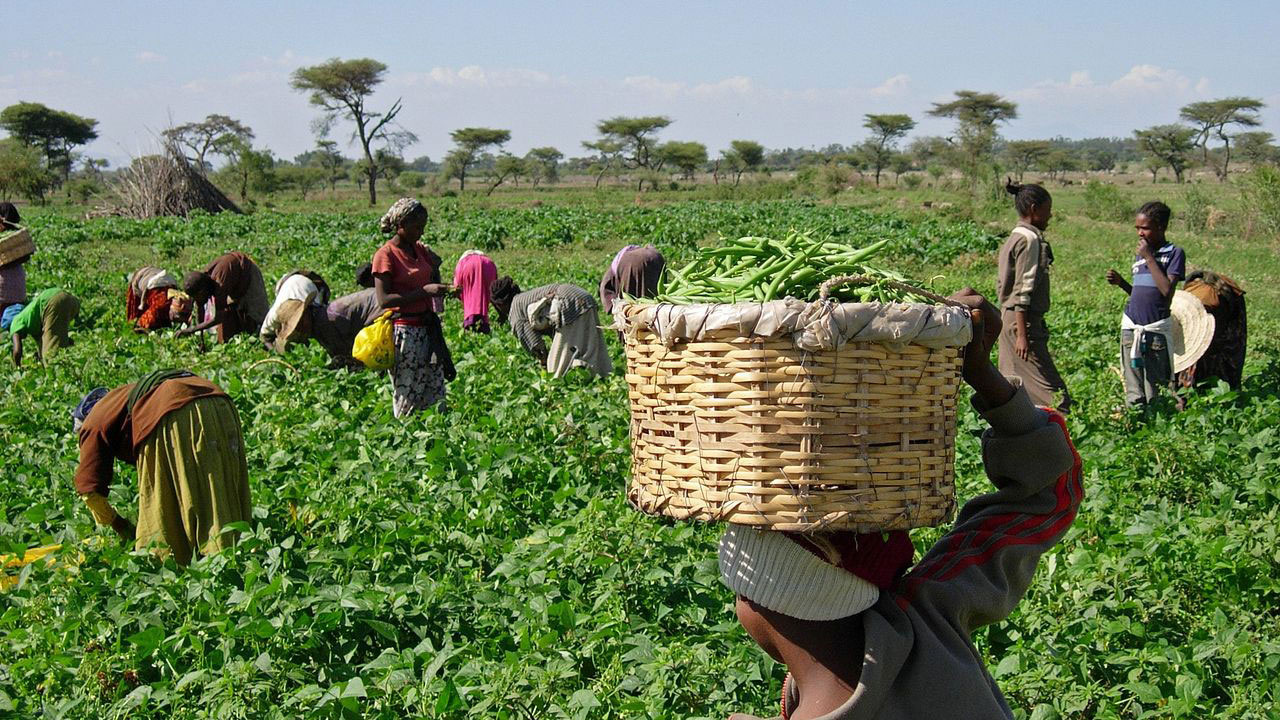
Farmers working on their farmland.
Nestlé Nigeria’s local sourcing operation is substantial and long-standing. The company has, over the years, reported working with more than 40,000 local farmers and processors. Earlier corporate disclosures also referred to 46,000 farmers who had received support through grain quality improvement initiatives. These figures relate to different periods and programmes. They are historical disclosures and should not be interpreted as the company’s current number of active suppliers.
More recently, its agricultural interventions have included the Climate-Smart Grain Production and Accessing the Structured Markets initiative, known as StreFaS. Although the project’s implementation period commenced in June 2024, it was officially launched in Zaria, Kaduna State, on May 6, 2025, by Nestlé Nigeria, AGRA and TechnoServe.
The three-year initiative, funded by AGRA and Nestlé with an investment exceeding $1 million, runs until October 2027 and targets 25,000 smallholder farmers across Kaduna and Nasarawa States. It focuses on maize, soybeans, rice and sorghum, with an emphasis on climate-smart production, regenerative agriculture and improved access to structured markets.
According to published programme progress information, StreFaS had engaged 12,373 farmers, with 40 per cent youth participation. It had also established 270 demonstration farms and supported 1,853 hectares under regenerative agriculture practices. These figures provide a more recent indication of the programme’s reach, although the number of farmers engaged should not automatically be interpreted as the number of active commercial suppliers to Nestlé.
Separately, the MAGGI regenerative agriculture pilot, which began in 2023 with an investment of more than ₦100 million, supported 1,030 soybean farmers and introduced practices such as cover cropping, minimal tillage, crop rotation and the establishment of hedgerows.
The company has also reported an improvement in the quality of grains supplied through its agricultural partnerships. Working with farmers and aggregators in Kaduna State, Nestlé says it reduced grain rejection rates from more than 30 per cent to 4 per cent. This represents a supply-chain improvement because grains that fail moisture, aflatoxin or foreign-matter standards cannot be accepted into industrial markets. Reducing rejection rates is not merely a public relations achievement. It is an operational necessity.
However, the existence of an agricultural programme does not automatically establish its developmental impact. The real test is whether participating farmers experience sustained improvements in income, recover their production costs and maintain commercially viable relationships with industrial buyers. Such outcomes must be assessed through evidence of actual sales, farmgate prices, production expenses and changes in household earnings.
The company’s publicly available reporting reviewed for this investigation provides information on farmers reached, training activities and agricultural interventions. However, it does not provide sufficient detail on the median net income of participating farmers, the attrition rate among trained farmers or the proportion of programme participants who remain commercially active suppliers. These indicators are important for assessing whether the benefits of agricultural interventions extend beyond training and improved production techniques.
The regenerative agriculture pilot provides an important example. Engineer Lawan Abdul, a soybean farmer in Kaduna, was reported in the programme’s account to have achieved a 100 per cent increase in yield after adopting the practices introduced through the initiative. His harvest reportedly increased from 12 to 24 bags per hectare. This represents a meaningful productivity improvement for an individual farmer. However, if soybean prices decline, as maize prices did in 2025, doubling production does not necessarily guarantee a corresponding increase in income. It could mean that the farmer produces more without earning enough to cover the additional costs of production. The programme addresses agronomic challenges, but higher yields alone do not eliminate the price risks that determine whether improved productivity translates into a sustainable livelihood.
Nestlé is not responsible for the global and domestic macroeconomic forces determining fertiliser and commodity prices. It is not the Central Bank of Nigeria and cannot determine the exchange rate. However, it is a major industrial buyer in several agricultural value chains, and its sourcing model depends on a farming sector whose production costs are under pressure. The question, therefore, is not whether Nestlé is doing something to support farmers. It is whether its interventions are sufficient to help those farmers remain in business.
The crisis at farm level is further compounded by a structural financing gap. The Governor of the Central Bank of Nigeria, Olayemi Cardoso, said in December 2025 that less than 5 per cent of bank lending went to agriculture, despite the sector’s contribution to the country’s Gross Domestic Product and its importance as a source of employment. Smallholder farmers, who account for a substantial share of Nigeria’s agricultural output, remain underserved because they often lack acceptable collateral and are considered high-risk borrowers.
The Agricultural Credit Guarantee Scheme Fund, established in 1977, guarantees up to 75 per cent of eligible agricultural loans issued by banks. It was expanded in 2019, with its share capital increased from ₦3 billion to ₦50 billion. However, the financing gap remains a major challenge. Interest rates exceeding 30 per cent in some commercial lending arrangements are prohibitive for a maize farmer whose break-even price is already significantly higher than the prevailing market price. A farmer cannot reasonably borrow at such a rate to produce a crop that may eventually sell for substantially less than its production cost.
Post-harvest losses further compound the problem. Poor drying facilities, inadequate storage, limited access to aggregation centres and weak rural infrastructure expose farmers to avoidable losses. For many smallholders, the lack of affordable storage means selling immediately after harvest, when market supply is often high and prices are under pressure. British International Investment has highlighted the scale of post-harvest losses as a constraint on agricultural productivity and food security. The problem is not simply that farmers need more training. They also need the infrastructure to preserve the value of what they produce.
This is the environment in which Nestlé’s local sourcing commitments must operate. The company can train farmers in good agricultural practices, distribute improved seeds and provide agronomic advice. It can also reduce grain rejection rates by teaching farmers better drying and storage methods. However, neither a $1 million programme nor a ₦100 million pilot is designed to replace the public infrastructure and services, including rural roads, affordable credit, storage facilities and extension services, that determine whether farming remains a viable business.
This investigation sought specific metrics regarding the median income of participating farmers, the attrition rate among trained participants, the proportion of StreFaS participants who have become active suppliers, and the company’s assessment of the impact of the 2025 fertiliser price crisis on its supplier base.
The company’s public statements emphasise its commitment to local sourcing and its partnerships with development organisations. However, the published information reviewed for this report does not provide the farm-level economic outcomes required to independently assess whether its sourcing model is delivering sustained financial benefits for participating farmers.
This is not a criticism peculiar to Nestlé. Corporate sustainability reporting across the food industry often focuses on activities, including the number of farmers trained, hectares covered and volumes purchased, rather than measurable improvements in farmers’ net incomes. A more comprehensive assessment of corporate agricultural programmes should go beyond these activity figures to examine farmers’ net incomes, crop rejection rates, production costs, payment timelines and the proportion of participating farmers who maintain commercially viable relationships with industrial buyers after receiving programme support.
Until such indicators are published, the developmental impact of corporate agricultural programmes remains, to a significant extent, difficult to independently verify.
The paradox is not merely a farmers’ problem. It is also a manufacturing problem. Nestlé’s profit recovery in 2025 was supported by stronger operational performance and a more stable foreign exchange environment. Its local sourcing strategy is also part of a wider manufacturing shift towards domestic raw materials. The Manufacturers Association of Nigeria reported that local raw material sourcing across the manufacturing sector increased to 57.1 per cent in 2024, from 52.0 per cent in 2023, with foreign exchange scarcity contributing to the drive towards local alternatives.
However, a local sourcing strategy is only as resilient as the agricultural sector supplying it. When farmers cannot afford fertiliser, they may cultivate less land. When production declines, available volumes can shrink. Manufacturers are then left with difficult choices: return to imported raw materials, exposing themselves once again to foreign exchange risks, or pay higher prices for locally available produce and potentially transfer additional costs to consumers.
The food inflation trajectory in 2026 has also reflected the volatility of the country’s food market. According to the National Bureau of Statistics, year-on-year food inflation fell to 8.89 per cent in January 2026 before rising to 12.12 per cent in February, 14.31 per cent in March and 20.31 per cent in July. Although it moderated to 19.57 per cent in August, it stood at 19.59 per cent in September. The figures illustrate how an initial improvement in food inflation did not translate into lasting stability in the food market. A decline in the rate of inflation also does not necessarily mean that food prices have returned to affordable levels.
Nigeria’s food manufacturing revival is, in effect, borrowing against the future of its farmers. This arrangement can continue only as long as farmers remain willing and financially capable of planting. The Kaduna farmers who reported losses exceeding ₦10.16 billion in 2025 warned that they could not afford to continue farming without intervention. If farmers facing similar conditions reduce production or leave the sector, the supply chains that Nestlé and other manufacturers have spent years building could come under pressure.
The solutions are not mysterious, although implementing them will require substantial investment and political commitment.
First, the input cost crisis requires a structural response rather than temporary seasonal subsidies. Fertiliser prices are influenced by the naira exchange rate, global gas prices and domestic production capacity. Nigeria has substantial gas reserves and major fertiliser plants, including the Dangote and Indorama facilities, yet farmers continue to face high input costs. A transparent pricing mechanism that reflects domestic production costs and improves access to locally manufactured fertiliser could help reduce production expenses. The Kaduna farmers’ proposal that government provide subsidised inputs in exchange for a share of the harvest offers a possible emergency measure, although it cannot serve as a long-term solution.
Second, agricultural credit must be restructured around the actual cash-flow cycle of smallholder farmers. A farmer who borrows at 30 per cent interest to cultivate maize that eventually sells at a loss is not necessarily an inherently poor credit risk. Rather, the situation may reflect a failure of agricultural financing and policy to account for the realities of production and market volatility. The ACGSF guarantee mechanism remains useful, but it needs to be supported by lower-cost wholesale funding and value-chain financing arrangements in which industrial buyers provide purchase agreements that banks can use to assess and secure loans. Nestlé’s existing sourcing relationships could help reduce lending risks for farmers if the company and financial institutions developed transparent arrangements for sharing supplier information and establishing forward purchase commitments. The extent to which such arrangements currently operate within its sourcing network is not sufficiently disclosed.
Third, the quality challenge must be addressed as an infrastructure problem rather than merely a training issue. The reduction in grain rejection rates from more than 30 per cent to 4 per cent is a reported achievement, but it does not resolve the storage deficit that can force farmers to sell immediately after harvest, when prices are often under pressure. Investments in solar drying facilities, hermetic storage systems and rural aggregation centres would enable farmers to preserve their produce and make better-informed marketing decisions. The technology already exists. What remains inadequate is the financing and infrastructure required to make it accessible to smallholder farmers.
Fourth, manufacturers must publish measurable farm-level economic outcomes. A company that claims to deliver developmental impact should be prepared to disclose the median net income of its suppliers, the attrition rate among trained farmers and the proportion of programme participants who remain active suppliers after receiving support. This is not an unreasonable demand. It is a basic requirement for demonstrating that the benefits of industrial sourcing are being shared with the farmers who make it possible.
The Nigerian farmer is not asking for sympathy. He is asking for a price that covers his production costs. The manufacturer is not asking for charity. It wants a reliable supply of quality raw materials. These two objectives are compatible, but only when agricultural policies and corporate sourcing models are designed around the actual economics of production.
Nestlé Nigeria has demonstrated that local sourcing can form an important part of a manufacturer’s supply-chain strategy. Its 2025 profit recovery provides evidence of a substantial financial turnaround, supported by stronger operational performance and improved foreign exchange conditions. However, a sourcing model that depends on farmers who cannot consistently recover their production costs faces a sustainability challenge. Unless the economic risks of production are better managed and more fairly shared, farmers may be left carrying a disproportionate burden of the costs and uncertainties that sustain industrial supply chains.
As a farmer, who has stood in a fertiliser queue and calculated the cost of cultivating a hectare before the rains arrive, the conclusion is unavoidable. Nigeria’s food manufacturing paradox will not be resolved through farmer training programmes or additional pilot projects alone. It will require a farming environment in which production costs are manageable, agricultural credit is affordable, storage facilities are accessible and industrial buyers, including Nestlé, build sourcing relationships that reflect the realities of agricultural production.
Until then, profits and losses will continue to be reported in different places, by different people and with different consequences. The company will report its earnings. The farmer will report his losses. And the country will continue to confront the consequences of an agricultural system struggling to feed its people.
Gbenga Isaac Shaba is a journalist and practising farmer. This investigation was supported by field interviews, company reports, NAERLS data, CBN statements and independent agricultural analysis.

Shaba Gbenga is a seasoned public relations guru and social media consultant. With over two decades of experience in journalism and media, he started his career with the Ondo State Radiovision Corporation (OSRC) before contributing to notable outlets such as Hope Newspapers, Encomium Magazine, and YES! International Magazine, among others.