


International Monetary Fund (IMF) data in its recent report showed that Nigerian women account for 70 per cent of the country’s extremely poor, despite the fact that they comprise only 49.3 per cent of the general population.
The Development Partner Group On Gender (DPGG) in its Press Statement, entitled “Accelerating Gender Equality” released during the celebration of 2024 International Women’s Day, in March, said that the gender gap in economic participation and opportunity remains a significant concern globally.
In Nigeria, according to DPGG, women’s labour force participation rate stands at 56%, as against 80% for men, showing a substantial disparity in workforce representation, noting that the gender wage gap remains a stark reality, with women earning 45% less than men in similar roles.
Emphasising the need to address this gap, DPGG advocated for a comprehensive approach through prioritization of policies and initiatives that promote women’s economic empowerment, including migrants, displaced and diaspora, such as providing access to quality education, financial services, improving vocational training, supporting women-led businesses, and enhancing women’s participation in decision-making processes.
This is important because, empowering women is synonymous to building a nation. Having brands that takes up the challenge of empowering women in three important aspects; Workplace, Marketplace, and in the Community; should be celebrated. And that is why Nestlé Nigeria’s quest in women empowerment most especially in this 21st century deserves all the encomium.
In line with the commitment of building and empowering women, Nestlé Nigeria has implemented several women empowerment programs that aim to uplift, support, and enhance the lives of women in various aspects. These programs focus on education, entrepreneurship, and leadership development, in enabling women to unlock their potential and become drivers of change.
Few weeks ago, Nestlé Professional, the Out of Home business arm of Nestlé Nigeria and a leading provider of food solutions, through its initiative boosted the local economy among food vendors in Nigeria through the Business of Food workshop in Sokoto. This empowerment program has transformed and equipped over 1,900 food businesses, most especially women across seven states with essential skills and knowledge to enhance their businesses and increase their income.
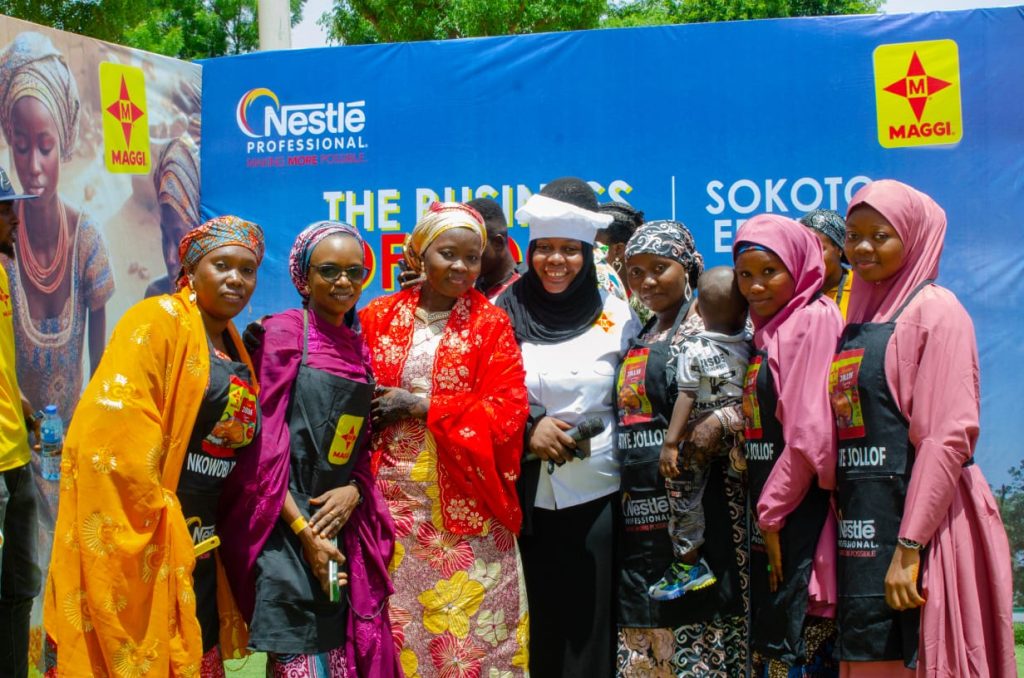
Cross section of participants at the Nestlé Nigeria organized workshop in Sokoto recently; themed the Business of Food.
The aim of the empowerment program is to help these women improve their businesses through networking, upskilling, and training on crucial aspects of the food industry, including culinary techniques, menu planning, customer engagement, and, most importantly, good hygiene practices.
Since August 2021, Nestlé Nigeria has helped more than 1,000 women to scale up their businesses by 300% and to sustain the new level through the Nestlé Empowering Rural Women in Nigeria Project. The beneficiaries are women within Nestlé Nigeria’s value chain, running small businesses in rural areas across Nigeria to empower rural women in Nigeria by helping them build financial security to improve their livelihoods; create Shared Value along its value chain. The program was established to help beneficiaries scale up their businesses and sustain the new level of up to three times the size of their existing businesses.
This objective is achieved through business training covering merchandizing, bookkeeping and customer service, mentorship and coaching in addition to grants in form of Nestlé products valued at 300% of their monthly sales at the time of joining the program.
Nestlé Empowering Rural Women in Nigeria Project began with 50 female retailers from the suburbs of Abuja. Currently, about 1,000 women from the South-East, North-East, South-South and South-West regions of the country are benefitting from the program. Over 80% of the beneficiaries have seen their incomes grow and can support their families better.
For emphasises, these Rural Women Empowerment Program is not a one-time event but an ongoing process of value creation. And through this project, Nestlé continues to help solve the challenge of poverty by empowering rural women across Nigerian communities, lifting them off the poverty spectrum and improving their livelihoods.
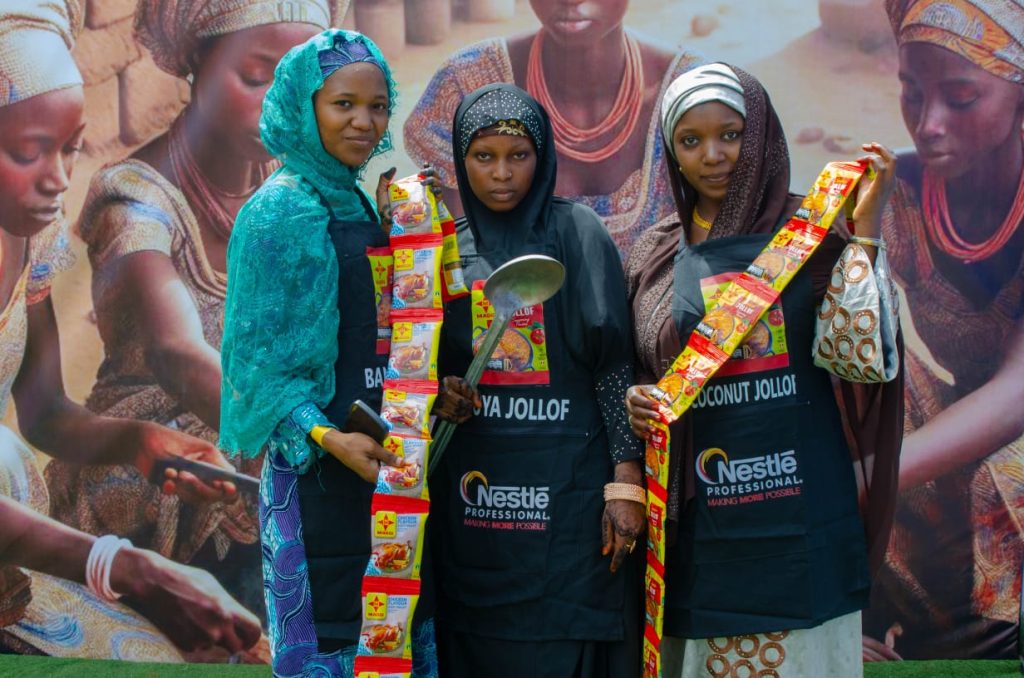
Participants displaying their tools after the training.
Also, Nestlé Nigeria genuinely supports and empowers women through its youth entrepreneurship initiatives. Of note, the Nestlé Youth Entrepreneurship Scheme (YES) gives training, mentorship, and financial support to young entrepreneurs, with a particular focus on women-owned businesses. The program offers workshops and guidance on business planning, financial management, and marketing strategies, equipping aspiring female entrepreneurs with the necessary skills and knowledge to start and grow successful enterprises. By encouraging the entrepreneurial spirit in women, Nestlé Nigeria enables them to become independent and successful business owners, contributing to their economic empowerment and the overall growth of the Nigerian economy.
This aspiration is achieved through business training covering merchandizing, bookkeeping and customer service, mentorship and coaching in addition to grants in form of Nestlé products valued at 300% of their monthly sales at the time of joining the program.
In addition to these unambiguous programs, Nestlé Nigeria is committed to maintaining an inclusive and gender-diverse work environment. The company cultivates equal opportunities for women to grow and excel in their careers by promoting policies and practices that ensure equal pay, work-life balance, and career development opportunities. Nestlé Nigeria also provides training and development programs to enhance the skills and capabilities of its female employees, enabling them to take on leadership roles and make valuable contributions to the organization.
Nestlé Nigeria’s various women empowerment programs reflect the company’s commitment to creating a gender-inclusive and supportive environment for women. Through mentorship, community engagement, sports initiatives, and entrepreneurship programs, Nestlé Nigeria strives to uplift and empower women in multiple facets of their lives. These programs provide education, skills training, mentorship, and networking opportunities, enabling women to unlock their potential, become leaders, and make positive contributions to society.
Nestle has taken an initiative to constantly involve more women in its workforce through Gender Balance Acceleration Plan.
Most impressively, the company is looking to increase the number of women in managerial positions. Currently, the company has been able to achieve as much as 44.5% females in its middle and senior management positions.
It also has 30.4% of women in its 200-plus Senior Executive positions. However, Despite these feats, Nestle is still looking forward to having more women in its top 200-plus Executives positions.
Not just on giving more responsibilities to women to serve at the top levels, Nestle is also ensuring that women in its workforce are valued and respected through its unbiased policies against discrimination, violence, and harassment at Work. They also provides guidance and support for employees, especially females who are victims of domestic violence or abuse. All these because, a violated and abusive woman will be counterproductive.
By empowering women, Nestlé Nigeria is not only contributing to gender equality but also fostering economic growth, social development, and a more inclusive and diverse society in Nigeria most especially in this 21st century; a feat that makes them leader in their sector.

Shaba Gbenga is a seasoned public relations guru and social media consultant. With over two decades of experience in journalism and media, he started his career with the Ondo State Radiovision Corporation (OSRC) before contributing to notable outlets such as Hope Newspapers, Encomium Magazine, and YES! International Magazine, among others.