


19 – 23 January 2026 | Davos, Switzerland
The World Economic Forum (WEF) Annual Meetings hold from 19–23 January 2026 under the theme “The Spirit of Dialogue.” The theme speaks directly to a global moment marked by fragmentation, rising protectionism, tightening capital flows, geopolitical tensions, and Weakening multilateral cooperation.
Nigeria’s engagement at Davos this year is shaped by a simple proposition: in a divided global economy, dialogue anchored in reform credibility and macroeconomic discipline matters more than ever.
Led by Vice President His Excellency Kashim Shettima, GCON, Nigeria’s delegation includes
The Honourable Minister of Finance and Coordinating Minister of the Economy, Mr. Wale Edun, is an invited VIP participant engaging global leaders, investors, development partners, and international media.
Why Nigeria’s Voice Matters at WEF 2026
At a time of heightened uncertainty, the world is looking to Nigeria as a pillar of economic
stability in Africa — not only because of its size, but because of the reform choices it has made.
Nigeria arrives at Davos with a clear message:
• It will continue to pursue sound macroeconomic management;
• It remains committed to market-oriented reforms;
• And it will safeguard institutional credibility, including the operational independence of the Central Bank of Nigeria, as a cornerstone of stability, investor confidence, and inflation control.
This positioning places Nigeria firmly within the global dialogue on how emerging markets can navigate volatility while sustaining reform momentum.
Three Strategic Objectives Guiding the Minister’s Engagement
1. Reporting Progress: Reform Credibility in Action
Nigeria will use Davos to demonstrate that reforms implemented since May 2023 are delivering measurable outcomes.
Key signals include:
• Stronger and more predictable macroeconomic conditions;
• Improving growth performance;
• Moderating inflation trends;
• Rising external buffers;
• And renewed international confidence, reflected in Nigeria’s removal from major global
financial grey lists.
The core message is accountability: Nigeria is showing up to report progress not promise intent.
2. Deepening Dialogue with Investors and Partners
In the spirit of WEF’s theme, the Minister’s engagements will prioritise listening as much as signaling.
Through meetings with:
• Development finance institutions,
• Global investors,
• Ratings agencies,
• Multinational corporates,
the objective is to:
• Sustain confidence in Nigeria’s macroeconomic direction;
• Address concerns around policy consistency, inflation, FX stability, and fiscal
sustainability;
• Reinforce Nigeria’s role as a reform anchor in the African region.
This dialogue builds on renewed investor interest, particularly from Europe and the UK, and Nigeria’s improving integration into global financial systems.
3. From Dialogue to Decisions: Concretising Investment
The third objective moves beyond conversation.
Over the past two years, Nigeria has initiated multiple investment discussions across energy, infrastructure, manufacturing, agriculture, technology, and financial services. Davos 2026 is about converting those discussions into commitments.
The Honourable Minister will engage investors around a practical question:
What specific actions, policy assurances, or frameworks are required to bring your investment in Nigeria to financial close?
This marks a shift from promotion to problem-solving, with a focus on unlocking delayed capital and accelerating execution.
Global Context: Why This Conversation Matters Now
Nigeria’s message at Davos is shaped by broader global realities:
• Global trade rules are being rewritten;
• Capital flows to emerging markets have tightened sharply;
• Debt burdens are rising across developing economies;
• Technology is reshaping labour markets faster than job creation;
• Climate finance remains unevenly distributed.
Against this backdrop, Nigeria is advancing a reform agenda centred on:
• Domestic resource mobilisation;
• Private-sector-led growth;
• Institutional credibility;
• And macroeconomic stability as the foundation for inclusive development.
Story Angles for Editors
Editors may consider the following angles emerging from Nigeria’s Davos engagement:
• Nigeria as Africa’s stability anchor in a fragmented global economy
• Reforms, institutions, and central bank independence in emerging markets
• From dialogue to deals: how Nigeria is converting reform credibility into investment
• Nigeria House as a new model for engagement and media access at Davos
• What global capital wants from emerging markets in 2026 — and how Nigeria is responding.
Conclusion
Nigeria’s participation at WEF 2026 is anchored on dialogue with purpose.
At a moment when global cooperation is under strain, Nigeria is positioning itself as:
• A credible reformer,
• A stable partner,
• And a market open for investment — backed by discipline, institutions, and dialogue.
For global media, Davos 2026 offers a timely lens into how Africa’s largest economy is navigating uncertainty while keeping reform momentum alive.
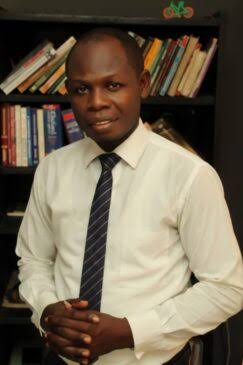
Shaba Gbenga is a seasoned public relations guru and social media consultant. With over two decades of experience in journalism and media, he started his career with the Ondo State Radiovision Corporation (OSRC) before contributing to notable outlets such as Hope Newspapers, Encomium Magazine, and YES! International Magazine, among others.