


Expo 2020 Dubai was a landmark exhibition held in the United Arab Emirates from October 2021 to March 2022, and attracted over 24 million visitors worldwide, making it one of the largest global gatherings of nations, innovators, and thought leaders in recent history. The event featured a vast array of thematic, premier partners and country pavilions, and immersive experiences that showcased global innovations, cultural diversity, and technological solutions to pressing worldwide challenges.
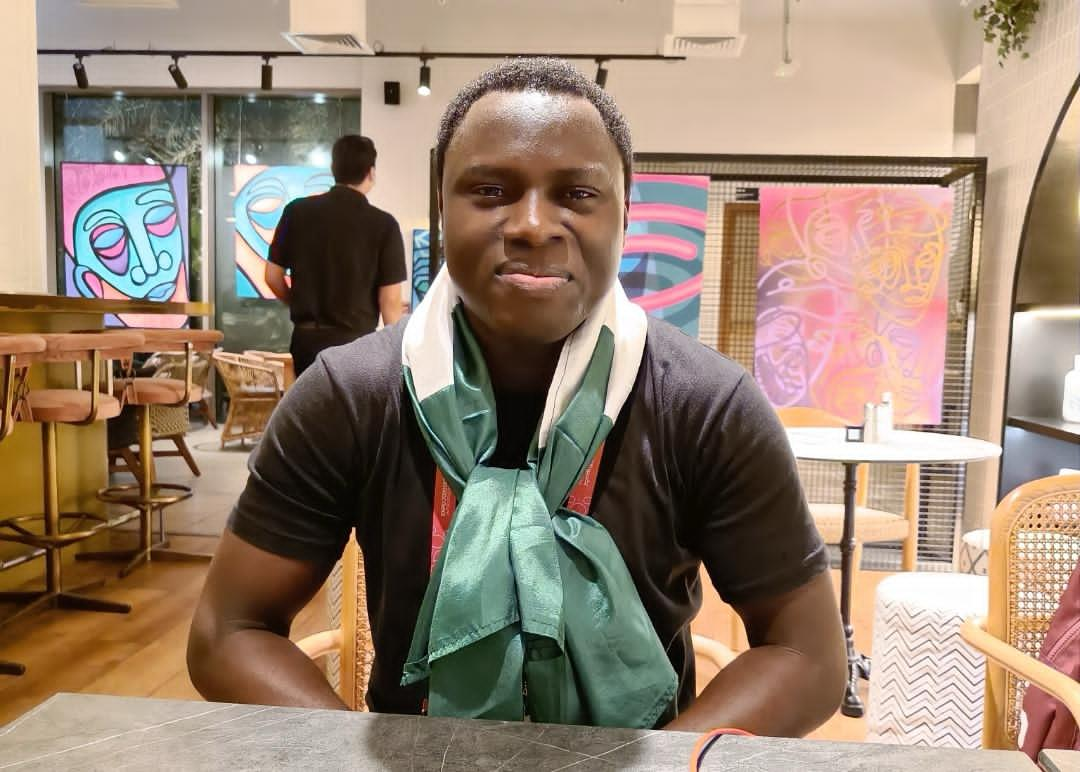
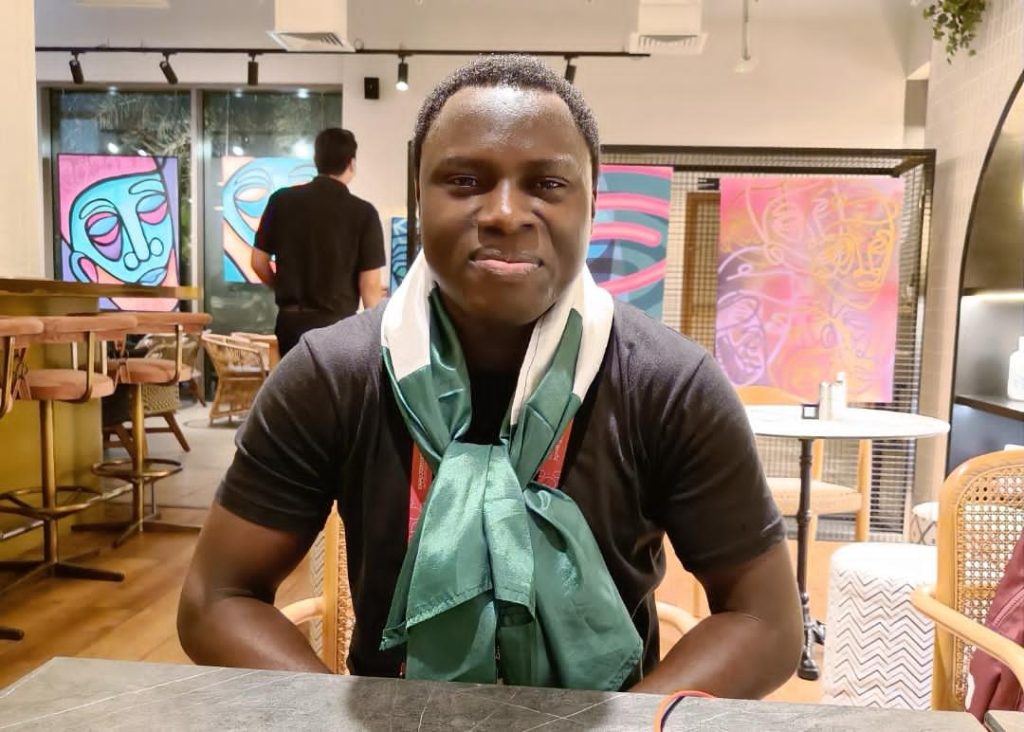
In an exclusive interview, Tomilola Boyinde shared about his experiences at the Expo. Boyinde served as Media Ambassador for DP World, a global logistic leader and Premier Partner of Expo 2020 Dubai. In this capacity, he played a key role in the execution of marketing and communications strategies that drew over 1.2 million visitors to the DP World Flow Pavilion. As the first World Expo hosted in the Middle East, South Asia, and Africa region, Expo 2020 Dubai provided a unique platform for Boyinde to combine strategic media engagement with immersive storytelling, bringing global audiences closer to pioneering technologies, smart trade innovations, and the transformative visions presented at the pavilions.
Q: You’ve described your Expo 2020 Dubai experience as travelling through 192 countries and more. What do you mean by that?
The World Expo is one of the few global events where nations come together not just to showcase culture, but to present their visions of the future through technology, architecture, storytelling, and innovation. Expo 2020 Dubai brought this vision to life at an unprecedented scale, hosting 192 national pavilions, each representing a country’s perspective on progress and the future. So when I say Expo 2020 Dubai felt like travelling through 192 countries and more, I mean that it created a rare situation where the world existed in one place. By intentionally engaging with all 192 country pavilions, I experienced how nations think about the future through their inventions, emerging technologies, and innovation priorities. While I was physically in Dubai, intellectually and culturally I was moving across continents every day, learning how different societies approach progress, resilience, and possibility.
Q: What was the main focus of your documentation across these countries?
The focus was on inventions and emerging technologies that signal where the world is heading. I looked at how countries are applying artificial intelligence, clean energy, smart infrastructure, advanced mobility, and sustainable systems to solve real problems. Importantly, I didn’t just document high-end technology; I also paid attention to grassroots and context-specific innovations that reflect local realities but have global relevance.
Q: Expo 2020 Dubai is often described as the world’s largest innovation showcase in recent year. Did your experience support that claim?
Absolutely. Nowhere else have I seen such a concentrated display of global innovation. From space technologies and autonomous systems to climate solutions and digital governance tools, the scale was unmatched. What stood out most was the diversity of approaches; how different countries, regardless of size or economic power, are innovating in their own ways. Honestly, I wasn’t even able to share 10% of what I documented because there was so much exhibited. Every pavilion had various innovations, and each innovation had multiple layers of technical and cultural context.
Q: How did you approach turning complex technologies into something understandable for the public?
Storytelling was central. Technology on its own can feel abstract, so I focused on explaining why an invention matters, who it serves, what problem it solves, and how it could shape the future. I particularly chose LinkedIn as the platform to share concise, accessible insights so professionals and non-specialists alike could engage with the ideas coming out of the Expo and what the future holds when these new worlds become commercialised.
Q: Which areas of innovation were most prominent across the 192 countries?
There were clear patterns. Artificial intelligence featured heavily, especially in public services and healthcare. Sustainability and clean energy were central themes, reflecting global climate priorities. Smart cities, autonomous and electric transportation, and digital education platforms also appeared repeatedly. What varied was how each country adapted these technologies to its own social and economic context.
Q: Was this World Expo Stories project part of an official role, or an independent initiative?
It was an independent documentation initiative that I intentionally developed alongside my professional engagements at the Expo. I saw a gap in how global innovation was being captured from a holistic perspective, and I wanted to create a record that connected technology with culture, people, and long-term impact. Even with my official access, there was so much happening that I could only scratch the surface of everything that was on display.
Q: What do you think is the long-term value of documenting these innovations now?
Documenting these innovations now is important because many of the technologies shown at Expo 2020 are still new or in transition. Some may succeed, others may fail, and many will evolve into something different. Recording them at this stage helps capture a clear picture of how the world was thinking about the future at this moment; we create a baseline that future generations can use to measure progress, divergence, and impact.
In ten or twenty years, people will be able to look back and understand what countries cared about, the problems they were trying to solve, and the ideas they believed could shape the future. It becomes a reference point for students, researchers, innovators, and policymakers to see how global priorities and thinking have changed over time. More importantly, it shows that progress is a journey, not just the final outcome, and that today’s experiments are often the foundation for tomorrow’s breakthroughs.
Beyond technology, the significance also lies in storytelling. These records help preserve the narratives behind innovation; the hopes, fears, cultural contexts, and philosophies embedded in each pavilion. In doing so, the documentation turns Expo 2020 from a temporary event into a lasting archive of human creativity, collaboration, and global foresight at the start of a transformative era.
Q: How does this work connect to Expo’s theme of ‘Connecting Minds, Creating the Future’?
This work directly reflects theExpo’s theme because it is about collaboration and shared progress. The World Expo showed that no single country is building the future alone. Each of the 192 national pavilions offered ideas, solutions, and perspectives shaped by different cultures, challenges, and priorities. By documenting these innovations and sharing them digitally, I was helping to connect minds beyond the physical space of the Expo site. Knowledge crossed borders, ideas became accessible, and learning became shared. It reinforced the idea that the future is created collectively, through exchange, curiosity, and understanding, not in isolation.
Q: What does this experience represent for you professionally?
Professionally, this experience placed me at the intersection of media, technology, and global engagement. It showed me that storytelling is not just about communication, but a form of infrastructure that helps people understand, adopt, and connect with innovation across cultures. It also reinforced my commitment to working on projects with global reach and long-term impact. Being part of Expo 2020 clarified the kind of work I want to do: building bridges between ideas, technologies, and people, and contributing to conversations that shape the future at a worldwide level.
Shaba Gbenga is a seasoned public relations guru and social media consultant. With over two decades of experience in journalism and media, he started his career with the Ondo State Radiovision Corporation (OSRC) before contributing to notable outlets such as Hope Newspapers, Encomium Magazine, and YES! International Magazine, among others.