


SHABA Gbenga.
“Since 2018, Nestlé Nigeria has been working with partners to recover as much plastic as we sell, based on a “one tonne in, one tonne out” principle. In 2021, we started on the step by teaming up with ALEF, to achieve our objective of cutting virgin plastic in our packaging by a third by 2025. Today, we are very proud to be the first to achieve this milestone of 50% rPET inclusion in our water bottles in Nigeria, thanks to the resilience of our team working with
ALEF to produce food grade rPET in Nigeria.” These were the words of Mr. Wassim, Elhusseini, MD/CEO of Nestlé Nigeria PLC, on the company’s feat at being the first in achieving the aim of cutting virgin plastic by 2025.
In December 2023, Nestlé Nigeria introduced new bottles including fifty percent recycled
polyethylene terephthalate (rPET), effectively reducing the use of virgin plastics in its packaging by 50%. This milestone in the company’s journey towards 100% plastics neutrality also ensures the last mile for plastics circularity.
The milestone was one of the ways Nestlé Nigeria has helped in achieving affordable, yet nutritious food processings and packagings in the country.
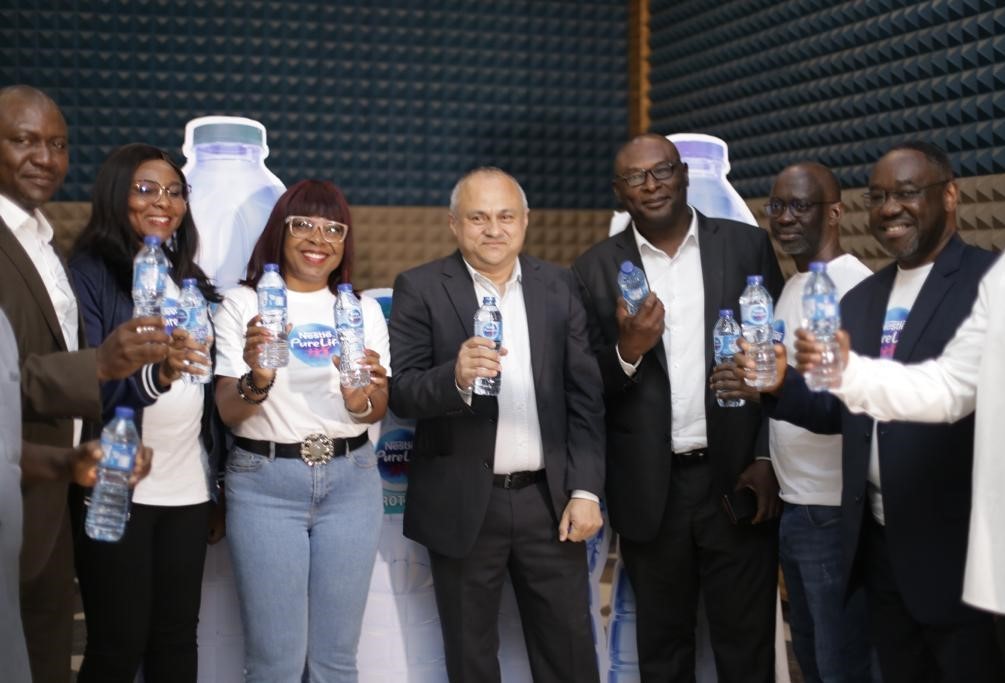
(L-R): Engr. Chukwudi Nwabuisiaku, Assistant Director (Food & Beverage/Plastic Waste Control) Inspection & Enforcement Department, National Environmental Standards and Regulations Enforcement Agency, NESREA; Mrs. Joy Abdullahi-Johnson, Category and Marketing Manager, Nestlé Waters; Mrs. Victoria Uwadoka, Corporate Communications and Public Affairs Manager, Nestlé Nigeria; Mr. Wissam Ramwali, Managing Director, Alef Recycling Company; Mr. Francis C Onuorah, Director, Chemical and No- Petrochemicals, Industrial Development Department, Federal Ministry of Industry, Trade and Investment; Mr Olawale Alao, Factory Manager, Nestlé Abaji Factory; Mr. Eugene Atte, Packaging Manager, Nestlé Central and West Africa Region.
As the distress on foreign exchange reserves in Nigeria continues, Nestle, the consumer food giant, is swiftly adjusting its raw material sourcing to mitigate production costs, source new, reliable and affordable means of providing nutrition.
This very important and strategic project has been underway since the scurge of the Covid-19 pandemic in 2020, which disrupted global supply chains and prompted consumer goods companies to localize their raw material supplies closer to production facilities and consumer markets for affordable, wholesome and nutritious options for consumers across the country, while providing long term benefits that are good for individuals and families, good for communities and good for the planet.
One of the move made by Nestlé to strengthen its nutritional portfolio was with the introduction of NIDO Milk and Soyabeans. The solution was described as a welcome idea, supported and applauded among consumers who sees it as another way of benefitting optimally with a downward cut in their spending, while enjoying the same quality.
NIDO Milk and Soya Instant Powder Mix was developed by local experts in Nestlé’s R&D Center in Abidjan and is produced locally in Nigeria using 100% locally sourced soyabeans. It is a result of Nestlé’s progress in product innovation, shift and renovation to meet the growing consumer demand for affordable nutrition options that also create societal value.
For over 62 years, Nestlé has been part of the daily nutrition of millions of households in Nigeria, by consistently using its research and development capabilities, innovative prowess to unlock the power of food to enhance the wellbeing of individuals and families.
NIDO Milk and Soya instant powder mix innovative product combines the double goodness of milk and soya, fortified with iron to provide consumers with an affordable, delicious and nutritious creamy milk and plant-based complement for beverages and cereals.
According to Ifeanyi Orabuche, the Category and Marketing Manager, Dairy, NIDO Milk and Soya is Nestle’s first affordable fortified dairy and plant blend in the Nigerian market. This unique blend of filled milk and soya is a source of Iron and has other essential nutrients including Protein, Calcium, Vitamin C, and dietary fiber which supports digestion and just like Nestle’s other products, available and affordable. It also joins Nestlé’s portfolio of fortified products to help address the high rate of micronutrient deficiency, especially of Iron in the country.
Aside the benefit of unlocking the power of food to enhance quality of life for everyone today and for future generations, with this new product, Nestlé has continued in helping to sustain a steady source of revenue and improving the livelihoods of the local farmers who supply the soyabeans used in the production of NIDO Milk and Soya.
Last year, Nestlé Nigeria also announced that in response to growing pressure on foreign exchange reserves in African countries the over rising import cost, the company is replacing imported corn starch with cassava so as to help local suppliers to increase capacity and improve quality.
In June 2023, the Central Bank of Nigeria (CBN) announced the unification of multiple forex markets in Nigeria, which caused the naira to fall by nearly 40% in value, further intensifying the challenges faced by businesses operating in the country, thereby putting pressure on foreign exchange.
To ensure these transitions, Nestle took various measures, including issuing letters of intent to suppliers, providing technical expertise, engaging with local authorities to establish quality standards, and offering financial assistance through advance payments.
In addition to replacing corn starch with cassava starch, Nestle is also striving to develop local suppliers for spices, which it traditionally imports from Asia so as to relive the pressure of fx.
These spices, used in its Maggi products, include onion powder for Senegal and Nigeria, and turmeric for Nigeria.
Despite all these, Nestlé Nigeria has refused to rest on their various achievements of providing affordable, wholesome and nutritious options for consumers across the country.
They daily seek for new innovations to create more nutritious and affordable food solutions to the growing population of the country.

Shaba Gbenga is a seasoned public relations guru and social media consultant. With over two decades of experience in journalism and media, he started his career with the Ondo State Radiovision Corporation (OSRC) before contributing to notable outlets such as Hope Newspapers, Encomium Magazine, and YES! International Magazine, among others.